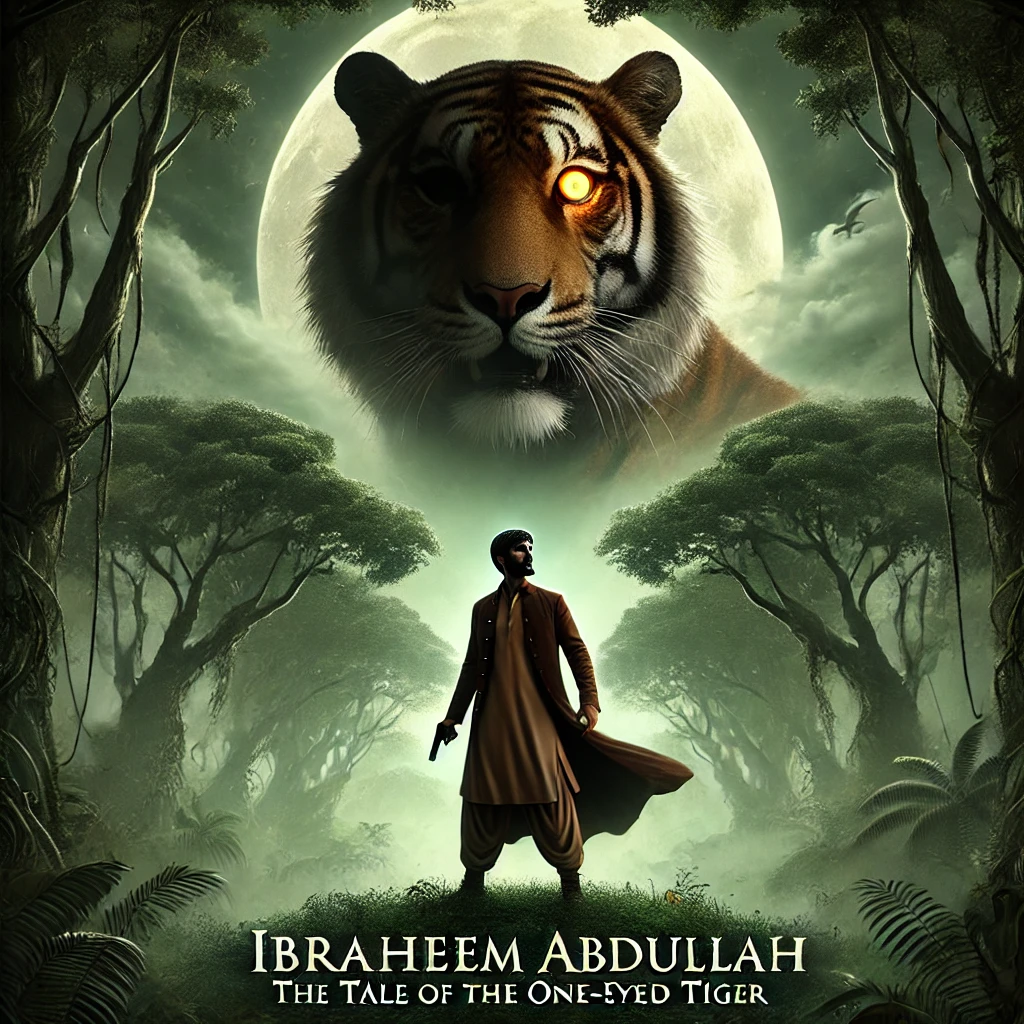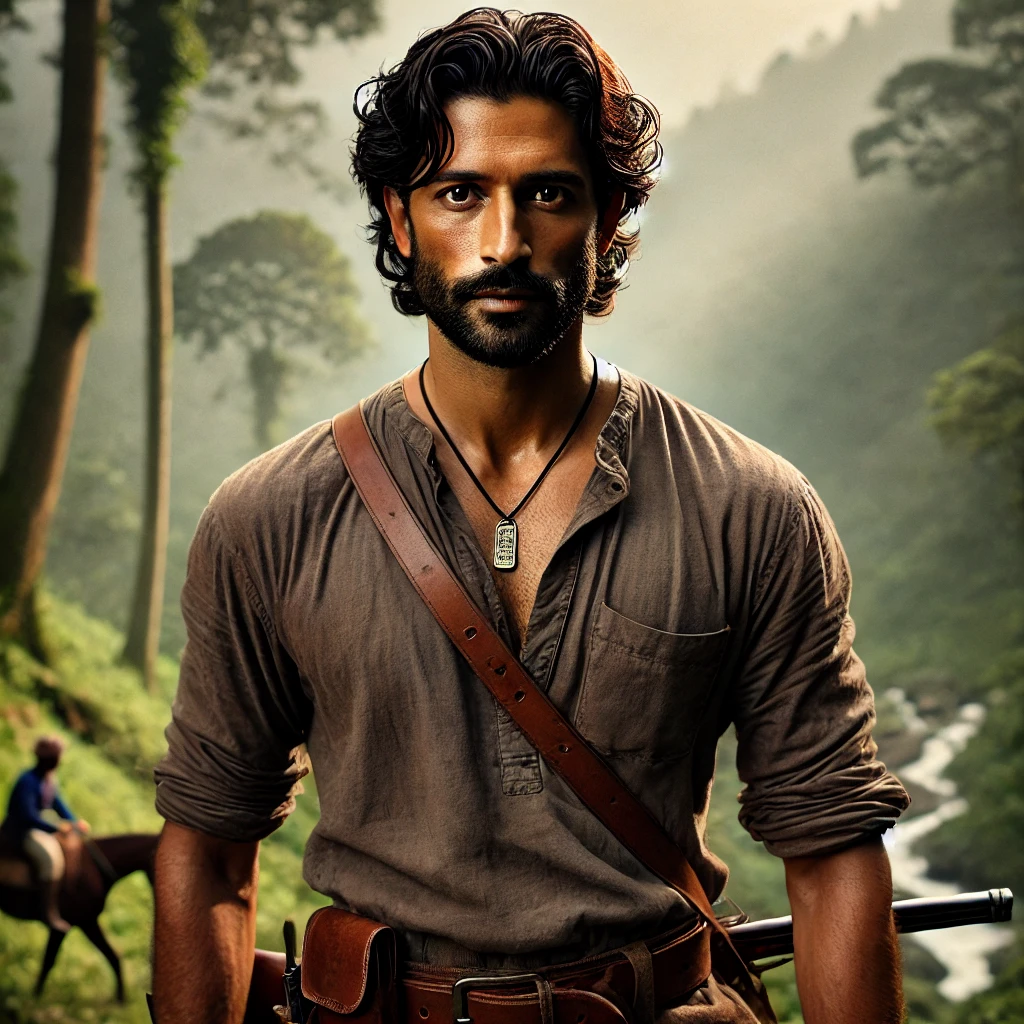
Ibraheem Abdullah is a man in his early 30s, tall and lean, with a rugged yet composed demeanor. His dark brown skin speaks of his time spent outdoors, moving through the dense jungles of Kumaon. His hair is black and wavy, slightly tousled, and kept short but neat, framing a face marked with the faint lines of someone who has lived a life of both peace and peril. His beard is well-groomed, short and dark, with a few silver strands that hint at wisdom beyond his years.
His eyes, deep-set and intense, are a rich shade of brown, thoughtful and often lost in contemplation, reflecting his deep connection to the land and its mysteries. His eyebrows are thick and strong, adding to the stern yet empathetic expression he carries, one that speaks of understanding both the beauty and the harsh realities of the wild.
Ibraheem wears a simple, practical outfit suited for the jungle: a faded brown kurta, worn at the edges from days spent navigating the wilderness, tucked into rugged trousers. His boots are sturdy, scuffed from the long journeys through the forest, and a leather belt holds a sheathed knife, a tool he never goes without. His rifle, slung casually over his shoulder, has seen better days, but it is still a reliable companion.
Around his neck, Ibraheem wears a small pendant with an Arabic inscription, a reminder of his faith, which he often touches in moments of quiet reflection. His posture is that of a man who is always alert, constantly aware of the world around him, yet there is a calmness in his demeanor, as though he has made peace with the dangers that surround him.
His voice is steady and authoritative, yet gentle, with a slight, melodic tone that reflects his upbringing and the spiritual grounding of his faith. When he speaks, it’s with purpose, and his words are often followed by a moment of contemplation, as though he is always weighing his thoughts before sharing them.